
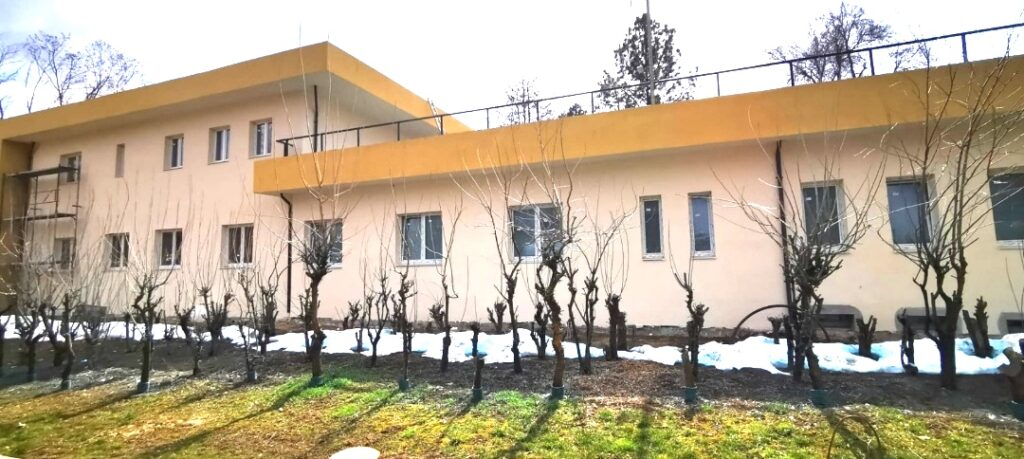
While Europe now imports most of the silk it processes, an ambitious project is taking shape in Romania: to revive a sericulture sector that has all but disappeared and establish a leading research centre dedicated to silkworms and mulberry cultivation in Băneasa, near Bucharest.
Led by the Băneasa Sericulture Research Station and supported by the Romanian Ministry of Agriculture and Rural Development, the project aims to gradually rebuild an entire silk production chain, from mulberry cultivation and silkworm rearing to the production and processing of silk thread.
Brochier Soieries is contributing to this ambitious initiative through the involvement of Eliza Ploia, a member of the International Sericultural Commission. From Lyon, she is helping to build connections between Romanian and French teams and facilitating the transfer of knowledge and expertise needed to support this revival.
Romania, a Historic Land of Silk
Silk has a long history in Europe. Introduced via Greece as early as the 6th century, sericulture gradually spread across the continent from the Middle Ages onwards. In Romania, it became firmly established in Wallachia during the 18th century before developing extensively in the 19th century, particularly across the Danube Plain. Silk, known in Romanian as “borangic”, became part of domestic textile production in rural households.
As in France and much of Europe, the industry subsequently went into gradual decline. Silkworm diseases, the emergence of man-made fibres and increasing competition from Asian countries progressively weakened European production. In Romania, sericulture survived for longer, particularly during the Communist period, before declining rapidly from the 1990s onwards.
Today, only a small number of Romanian producers remain and the sector is still in its infancy. Yet the many mulberry trees found throughout the country continue to bear witness to the importance sericulture once held there.
It is upon this heritage that Romania now hopes to rebuild.
Băneasa: A New Research Centre for the Future of Sericulture
At the heart of this revival is the Băneasa-Bucharest Sericulture Research Station.
Established in its current form in 2023 as a public institution under the authority of the Romanian Ministry of Agriculture and Rural Development, it is the heir to a long tradition of sericultural research. Among its most valuable resources is an exceptional genetic heritage comprising 84 pure lines of Bombyx mori, the domesticated silkworm.
Under the direction of Teodor Mihalcea, the station is now undergoing a major programme of development: the construction of a modern research centre, the creation of a team of researchers and technicians, the preservation and improvement of silkworm strains, research into mulberry varieties and the development of improved rearing techniques.
Together with two additional development sites in Cislău and Dolj, the new Băneasa centre is expected to be fully operational from 2027. With its new facilities and remarkable genetic resources, its ambition is to become a European reference centre for sericultural research.
But the objective extends far beyond scientific research alone. In the longer term, the revival plan envisages rebuilding the entire production chain: increasing the area planted with mulberry trees, training silkworm breeders, expanding cocoon production, developing new silk-reeling facilities, and ultimately rebuilding silk throwing and weaving capabilities.
The ambition is therefore to revive a genuine silk production sector in Romania.
Eliza Ploia: Building a Bridge Between Lyon and Romania
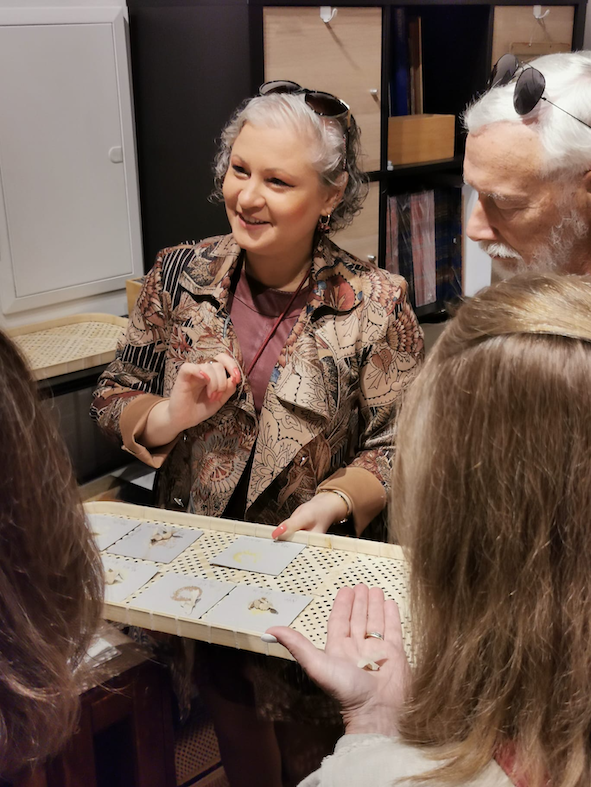
Eliza Ploia
It was in 2024 that Eliza Ploia first learned about the project to revive the Băneasa Research Station.
Born in Romania and based in Lyon since 2004, Eliza has worked with Brochier Soieries since 2005. Since 2014, she has also maintained an educational silkworm (Bombyx mori) breeding programme at Brochier Soieries Vieux Lyon, giving visitors the opportunity to discover the different stages of the silkworm’s life cycle through to the production of its precious thread.
Each year, she also provides silkworm eggs to nearly 200 schools in France and across Europe for educational breeding projects. Her interest in sericulture also led her to become a member of the International Sericultural Commission.
When she learned in 2024 that Romania had reactivated its sericulture research station, she contacted its director, Teodor Mihalcea. A first meeting took place in Lyon in May 2025 during a visit by a delegation from the International Sericultural Commission, followed by a visit to Băneasa in July of the same year.
Eliza then proposed establishing an exchange of expertise between the Romanian team and French sericulture specialists.
An initiative that soon began to take very concrete form.
From Lyon to Băneasa: Sharing and Passing On Expertise
On 16 and 17 March 2026, Eliza Ploia and Signorino Leonardi travelled to Băneasa for a new working visit. As members of the International Sericultural Commission, they helped establish a technical and scientific collaboration aimed at preserving Romania’s genetic resources and supporting the redevelopment of silkworm rearing.
The visit also provided an opportunity to assess the existing facilities and identify the technical, scientific and economic requirements involved in rebuilding Romanian silk production.
A further step was taken from 24 to 28 May 2026. Under the auspices of Brochier Soieries – Vieux Lyon, Michel Costa, an agronomist and sericulture specialist, and Alexandra Gaidos, an economist and co-president of Cévennes en Soie, travelled to Romania. Their mission directly continued the work initiated by Eliza Ploia and Signorino Leonardi two months earlier.
Michel Costa brings particularly valuable expertise to the project. Based in Monoblet, in the Cévennes region of southern France, he has extensive knowledge of the entire sericultural process, from mulberry cultivation and propagation to silkworm rearing and cocoon reeling. He has also taken part in several international technical-assistance missions dedicated to silk production.
The collaboration initiated by Eliza is therefore helping to connect Băneasa’s scientific and genetic resources with sericultural expertise that remains alive in France.
30,000 Mulberry Seeds and New Training Projects
This cooperation is now beginning to translate into concrete action.
Michel Costa has donated 30,000 mulberry seeds to the Băneasa Research Station. The Romanian team plans to begin its first sowing trials in 2027, with the aim of studying the propagation and selection of varieties suited to local conditions.
Mulberry cultivation is a fundamental part of any sericulture revival: the quality and quantity of leaves available directly determine the successful rearing of silkworms and, ultimately, cocoon production.
A practical training programme in the Cévennes is also being discussed for spring 2027. Members of the Băneasa team could join Michel Costa in Monoblet when he begins his annual silkworm rearing cycle, allowing them to receive hands-on training in both sericulture and mulberry cultivation.
The transfer of expertise has emerged as one of the central issues identified during the various missions. After several decades during which European sericulture virtually disappeared, some of its knowledge and skills now need to be recovered, shared and passed on to a new generation of researchers and producers. The May report therefore highlights the importance of training those who will manage future pilot farms and of developing a genuine European and international network around Băneasa.
A Movement Extending Beyond Romania
This revival is now attracting interest well beyond Romania itself.
In October 2026, the International Sericultural Commission will meet in Romania, with the programme including visits to silk-reeling facilities that remain in operation. The meeting reflects the growing momentum in the region and the desire to reconnect researchers, producers and silk-processing specialists.
Behind the Romanian project lies a broader question: what future is there for silk production in Europe?
Both France and Romania once mastered the entire production chain, from mulberry cultivation to silk reeling. Today, Europe is highly dependent on Asia for its supply of silk thread. Rebuilding European production will take time and require investment, research and, above all, the transmission of skills that have become increasingly rare.
With its sericultural heritage, favourable environmental conditions and textile expertise, Romania nevertheless has significant assets that could enable it to play a pioneering role in this European revival.
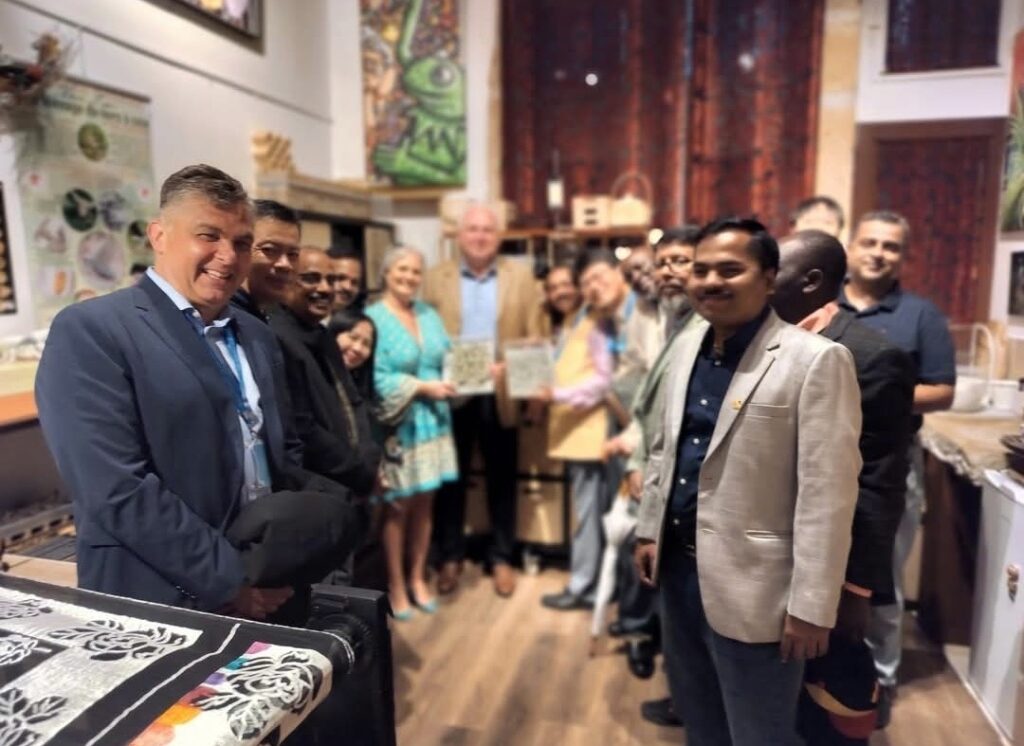
Visit of the International Sericultural Commission to Brochier Soieries Vieux Lyon on 19 May 2025, with delegations from Romania, India, Bangladesh, Japan, Thailand, Uganda, Ghana and Mozambique
Brochier Soieries: Committed to the Future of Silk
For Brochier Soieries, supporting this initiative is a natural extension of the history of a House that has worked with and transformed silk in Lyon since 1890.
For more than a century, the House has preserved and passed on expertise associated with this exceptional material. But preserving silk does not simply mean preserving the skills required to weave, print or transform it. It also means looking to the very origins of the material, its production, and the women and men who still hold the knowledge required to produce it.
Through Eliza Ploia’s involvement, the connections established between Băneasa, Lyon and the Cévennes, and the exchange of expertise now taking shape, Brochier Soieries hopes, in its own way, to contribute to passing on sericultural knowledge and to the revival of silk production in Europe.