
Crédit Iulian Rotaru
Introduction
If you’re asking yourself what should I see in Lyon, you are not alone. This French city, located at the confluence of the Rhône and Saône rivers, is a place where history, culture, and gastronomy come together in extraordinary harmony. Recognized as a UNESCO World Heritage Site, Lyon combines Renaissance architecture, Roman artifacts, bustling food markets, and vibrant festivals.
Whether you are visiting Lyon for just a few days or planning a longer Lyon itinerary, the city offers endless opportunities to explore. From the winding streets of Vieux Lyon sightseeing to the futuristic Musée des Confluences, from savoring delicacies at Les Halles de Lyon to attending the spectacular Fête des Lumières, Lyon attractions captivate every traveler.
This guide will take you through the unmissable sites and experiences so you know exactly what to see in Lyon.
Vieux Lyon: A UNESCO World Heritage Site
One of the first stops on any Lyon trip should be Vieux Lyon. As part of the UNESCO World Heritage Site, this district is among the largest Renaissance neighborhoods in Europe. Exploring Vieux Lyon means wandering through narrow city streets lined with pastel façades, secret traboules (passageways), and elegant courtyards.
Highlights include the Cathédrale Saint-Jean Baptiste, often called Lyon Cathedral, which dates back to the Middle Ages. Its Gothic and Romanesque architecture, astronomical clock, and connection to the Virgin Mary make it a central landmark. Just steps away, you’ll find Rue du Bœuf with its charming restaurants, as well as the atmospheric squares where local culture thrives.
Don’t miss the Lyon History Museum, which gives context to the city’s development from the Roman period to modern times, and the nearby Roman amphitheater, which reveals Lyon’s ancient past as the Roman capital of Gaul. Just a short walk away, Tetedoie’s rooftop offers a stunning view of the city.
Fourvière Hill: A panoramic highlight
No list of Lyon attractions would be complete without Fourvière Hill. Rising above the city, it is home to the stunning Notre Dame Basilica—officially the Basilica of Notre-Dame de Fourvière. Built in the 19th century, this masterpiece is dedicated to the Virgin Mary, who is considered the city’s protector.
Inside, intricate mosaics and stained glass dazzle visitors. Outside, the esplanade offers some of the best panoramic views in Lyon, stretching across rooftops, rivers, and even toward the Alps on clear days.
The hill is also a gateway to Lyon’s Roman heritage, with two ancient theaters where concerts and festivals are still held. This combination of spirituality, history, and scenic beauty makes Fourvière a must-see.
Cathédrale Saint-Jean Baptiste: A Gothic treasure
Back in the heart of Vieux Lyon, the Cathédrale Saint-Jean Baptiste is another essential answer to what should I see in Lyon. Constructed between the 12th and 15th centuries, it stands as a symbol of faith and resilience.
The cathedral has witnessed significant events, from royal visits by King Louis XIV to the struggles of World War II. Its Gothic façade, rose windows, and unique astronomical clock make it one of the most fascinating landmarks in this French city.
Les Halles de Lyon: The temple of gastronomy
Food lovers asking what should I see in Lyon will find their paradise at Les Halles de Lyon – Paul Bocuse. This covered market is named after the legendary chef and epitomizes Lyon’s role as the culinary capital of France.
Inside, visitors can taste local delicacies ranging from cheeses and charcuterie to oysters, pralines, and wines. Traditional dishes such as quenelles, saucisson brioché, and pâté en croûte are presented alongside modern interpretations of French cuisine.
This is also the best place to sample specialties before venturing to a traditional bouchon in the city centre. A visit to Les Halles de Lyon is more than a meal—it is an immersion into Lyon’s culinary traditions and a tribute to its title as gastronomic capital.
Art and culture: From museums to murals
Art lovers wondering what should I see in Lyon will be delighted by the city’s rich offerings:
Musée des Beaux Arts (Fine Arts Museum): Often compared to the Louvre, this museum—housed in the Palais Saint-Pierre on Place des Terreaux—contains treasures spanning antiquities to modern art. It is a must for any Lyon trip.
Opéra National de Lyon: Close to the Hôtel de Ville, the opera house combines a classical façade with a bold modern rooftop design. Performances here showcase the city’s contemporary cultural vibrancy.
Mur des Canuts mural and Fresque des Lyonnais: These massive frescoes illustrate Lyon’s silk heritage and honor famous figures like Antoine de Saint Exupéry. They are unique open-air galleries on the city streets.
Fontaine des Jacobins: The beautiful Fontaine des Jacobins is a jewel of 19th-century architecture located in a grand pedestrian square.
Together, these sites highlight how Lyon blends tradition, creativity, and innovation.
Musée des Confluences: Where science and culture meet
Located at the tip of the peninsula where the Rhône and Saône converge, the Musée des Confluences is one of the most striking modern Lyon attractions. Its futuristic glass and steel design is a sight in itself.
Inside, exhibitions cover anthropology, natural history, and global cultures. From dinosaur skeletons to space exploration, the museum blends science with storytelling. It also connects Lyon to international cultural dialogues, making it a fascinating stop for families and curious minds alike.
Musée Soieries Brochier: Lyon’s living silk heritage
Lyon’s identity is inseparable from silk, a craft that shaped the city’s economy, architecture, and reputation for centuries. If you are wondering what should I see in Lyon to understand this heritage, a visit to the Musée Soieries Brochier is essential. The Brochier family has been weaving, printing, and innovating with silk since 1890, and today Maison Brochier Soieries remains one of the last silk houses still operating in the heart of the city. Within the workshop and museum, visitors can discover original printing techniques, admire collections that link Lyon’s past to contemporary design, and see firsthand how local artisans preserve this rare know-how. More than a museum, it is a living testimony to the artistry that made Lyon world-famous.
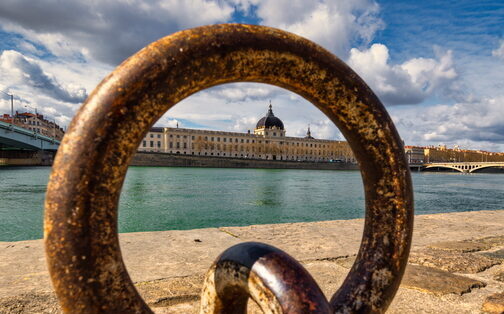
The Musée Soieries Brochier is located inside the Grand Hôtel-Dieu, one of Lyon’s most iconic landmarks. This historic building—once a hospital dating back to the Middle Ages and now beautifully restored—has become a vibrant hub of culture, gastronomy, and shopping. Exploring the Grand Hôtel-Dieu alongside the silk museum offers visitors two exceptional experiences in one, combining heritage, craftsmanship, and architectural beauty.
Les Nuits de Fourvière: Culture under the stars
One of the most magical times to visit Lyon is during Les Nuits de Fourvière. This summer festival takes place in the ancient Roman theaters on Fourvière Hill. The program includes concerts, theater, dance, and cinema, featuring artists from around the world.
Experiencing a performance under the stars in a setting that combines Roman artifacts with contemporary creativity is unforgettable. For many visitors, it becomes the highlight of their Lyon itinerary.
Fête des Lumières: Lyon’s signature event
Another unmissable answer to what should I see in Lyon is the world-famous Fête des Lumières. Every December, the entire city is transformed into a glowing spectacle of light installations and artistic projections.
The festival originated in 1852, when the people of Lyon placed candles in their windows to honor the Virgin Mary. Today, it has grown into a major international event attracting millions of visitors. Landmarks such as the Hôtel de Ville, Place des Terreaux, and the stunning Notre Dame Basilica are illuminated in dazzling displays.
The Fête des Lumières is not only one of the most popular Lyon attractions but also a celebration of community and creativity.
Parc de la Tête d’Or and Lyon’s botanical gardens
For those who love green spaces, Parc de la Tête d’Or is a must-see. This vast urban park includes a lake, rose gardens, and a zoo, making it a favorite spot for both locals and travelers.
Within the park, you’ll find Lyon’s botanical gardens, home to thousands of plant species from around the world. It’s an oasis of calm, perfect for balancing a busy Lyon trip filled with sightseeing.
Deportation History Center: Remembering World War II
While Lyon is famous for its Renaissance beauty and gastronomy, it also has sites dedicated to memory and reflection. The Deportation History Center is one of the most poignant.
Located near the Rhône river, it commemorates victims of the Holocaust and highlights Lyon’s role in the French Resistance during World War II. Exhibits include testimonies, documents, and artifacts that make history tangible.
Visiting this site offers a deeper understanding of Lyon beyond its landmarks and ensures that history is never forgotten.
Everyday life in Lyon
To truly understand what you should see in Lyon, it’s worth experiencing daily life in the city. Stroll through Rue de la République, one of the main shopping avenues, or relax at a café near Place des Terreaux. Explore local markets where vendors sell cheeses, meats, and fresh produce.
Neighborhoods such as La Croix Rousse still echo with the legacy of silk workers, while East Lyon offers a glimpse of modern neighborhoods and cultural venues.
Walking through the cobbled city streets, enjoying a glass of wine in a hidden square, or admiring the skyline at sunset—all of these moments reveal Lyon’s soul.
Conclusion
So, what should I see in Lyon? The answer is as rich as the city itself. From the Roman ruins on Fourvière Hill to the Cathédrale Saint-Jean Baptiste, from tasting delicacies at Les Halles de Lyon to marveling at the Fête des Lumières, Lyon attractions are both timeless and diverse.
Art, history, gastronomy, and everyday life blend seamlessly in this French city. Whether you are admiring masterpieces at the Musée des Beaux Arts, reflecting at the Deportation History Center, or enjoying Les Nuits de Fourvière under the stars, each experience enriches your Lyon itinerary.
Visiting Lyon is not just about sightseeing—it’s about immersing yourself in centuries of culture, resilience, and creativity. Next time you plan a Lyon trip, make sure to explore beyond the guidebooks, and you’ll understand why this city is one of France’s greatest treasures.
An article written by Brochier Soieries.